Hands-on with Instagram Edits app
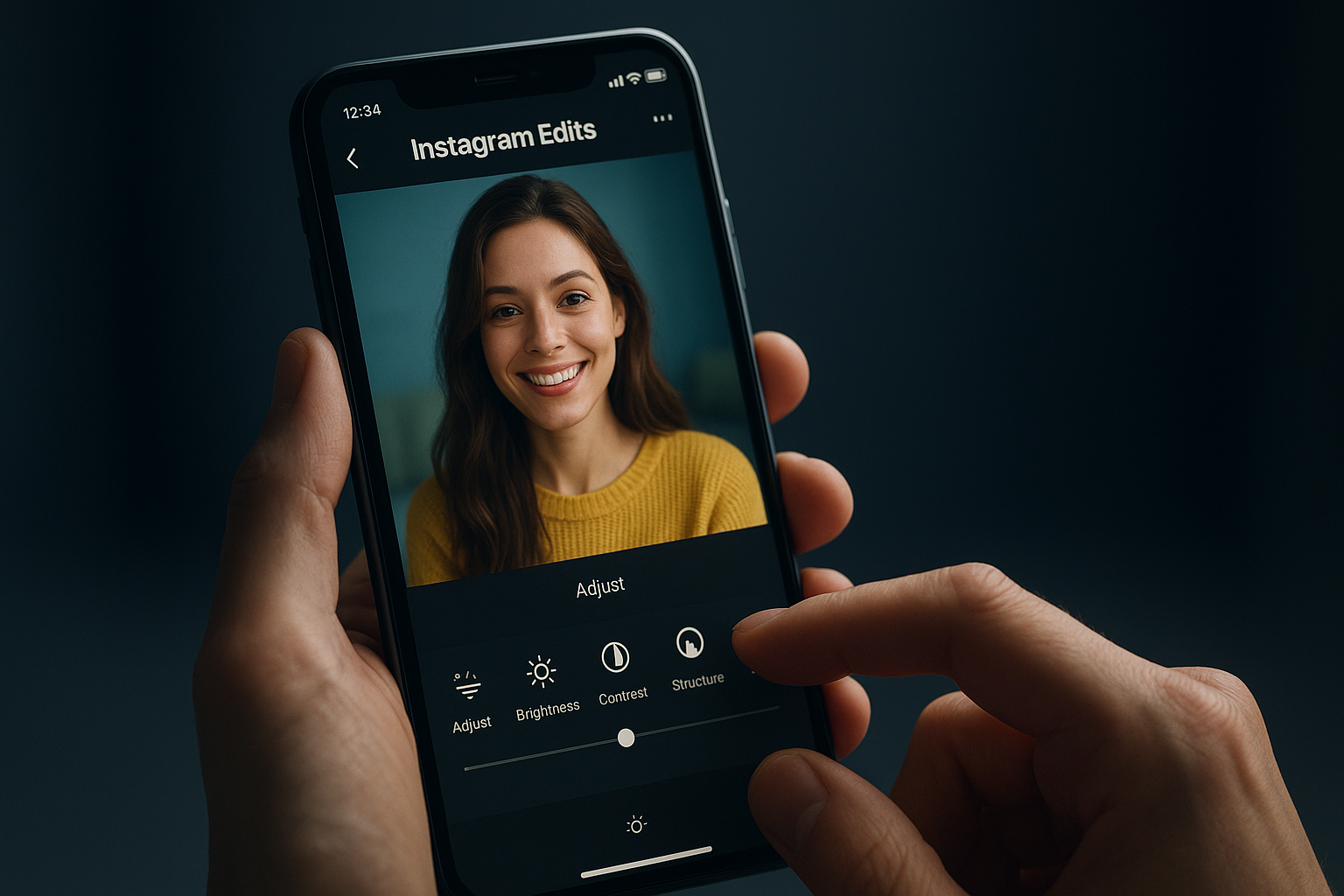
Most video editors bury their best tools under three layers of menus. The Instagram Edits app doesn't. That single design choice explains why so many creators who tried CapCut or InShot for years are suddenly rethinking their workflow. This isn't a stripped-down companion tool bolted onto the main Instagram app - it's a genuine standalone editor, built with the assumption that Reels deserve the same production care as any other short-form video.
After weeks of actually using it - cutting real clips, testing exports, tracking how updates changed the experience - a clear picture emerges of where the instagram edits app succeeds and where it still has rough edges. This hands-on account covers the interface, the editing tools themselves, and how the app has shifted since launch. It also looks at where things are headed, since Meta has been vocal about expanding the platform's editing ambitions. Editing is only half the equation, though. A polished Reel still needs eyes on it, and creators serious about growth often pair strong editing with distribution tactics like an instagram view boost to get fresh content moving in front of new audiences instead of sitting quietly in a feed.
What follows is a grounded, experience-based breakdown - not a marketing summary - of what this app actually does, what it doesn't, and whether it deserves a permanent spot on your phone.
What Is the Instagram Edits App and Why It Exists
Meta built the Edits app as a direct response to a problem it couldn't fully solve inside Instagram's main app: serious video editing requires serious tools, and cramming a multi-track timeline into a social feed app was never going to work well. So instead of stuffing more sliders into the existing Reels camera, the company created a separate, dedicated editor - one that lives outside the main app but connects directly back into it for publishing.
The instagram edits app details that matter most here are simple. It's free, it's built specifically for vertical short-form video, and it's designed so that a finished project can be pushed straight to Reels without exporting, re-importing, or losing quality along the way. That direct pipeline is the entire reason the app exists - Meta wants creators editing and publishing without ever leaving its ecosystem.
The app is aimed at a fairly wide range of users:
- Casual creators who want better tools than the basic in-app camera without learning a complicated program
- Full-time content creators looking to consolidate their workflow into fewer apps
- Small brands and marketing teams producing regular Reels content
- Aspiring influencers who've outgrown simple trimming apps but aren't ready for desktop software
First Impressions: Interface and Onboarding
Opening the app for the first time feels closer to a professional editing tool than anything Instagram has shipped before. There's a clean project dashboard, a media library pulled from your camera roll, and a timeline that's immediately visible rather than hidden behind a tap. Onboarding is short - a few swipe-through screens explaining the timeline, the effects panel, and the export button - and then you're dropped straight into your first project.
Compared to native Instagram editing, where tools are scattered across separate screens for filters, text, and stickers, the Edits app puts everything on one continuous timeline. That's the biggest functional difference, and it's noticeable within the first few minutes of use. Creating a first project takes roughly the same steps as any modern mobile editor: import clips, arrange them on the timeline, trim the edges, and preview before exporting.
A few practical tips make the early experience smoother. Import all your clips at once rather than adding them one at a time, since the app organizes them more predictably that way. And take a moment to explore the effects panel before starting a real project - several transitions and overlays are tucked into submenus that aren't obvious on first glance.
Core Features: A Deep Dive
The real test of any editing app is what happens once you start actually cutting footage together. The Edits app holds up well here, offering tools that go noticeably beyond what you'd find in a basic trimming app.
Timeline Editing and Multi-Track Support
The core of the app is its multi-track timeline, which allows video, audio, text, and overlay layers to sit independently of one another. Trimming a clip is a matter of dragging its edge; splitting a clip happens with a single tap at the playhead. For anyone used to single-track mobile editors, this is a genuine upgrade - you can adjust one layer without disturbing the others, which makes revisions far less frustrating.
A typical workflow looks like this: drop your raw clips onto the main track, add a secondary track for text overlays, then a third for background music. Because each track is independent, you can nudge the music track two seconds later without touching your video cuts at all.
Audio Tools and Sound Library
Audio handling is more capable than expected from a first-generation app. Voiceover recording happens directly on the timeline, synced automatically to whatever clip is playing underneath. The built-in sound library includes a reasonable range of licensed tracks, and waveform visualization makes it easy to sync cuts to a beat without guessing.
AI-Powered Effects and Templates
This is where recent instagram edits app news has focused most heavily. Auto-captioning has improved noticeably since launch, transcribing spoken dialogue with reasonable accuracy and allowing quick styling adjustments afterward. Templates let you reuse a specific editing style - transitions, text placement, pacing - across multiple videos, which is useful for creators maintaining a consistent visual identity across a series of Reels.
Export Options and Quality Settings
Export handles resolution and frame rate settings sensibly, defaulting to whatever matches your source footage rather than forcing a downgrade. The direct-publish option to Instagram is the standout feature here: finished projects can go straight to Reels without a separate export-then-upload step, preserving quality that would otherwise degrade through repeated compression.
Instagram Edits App Update: What's Changed Recently
Like most apps still finding their footing, Edits has moved quickly since its initial release. Each instagram edits app update has tightened performance, added requested features, and ironed out bugs that frustrated early adopters. Update frequency has been steady enough that it's worth checking release notes every few weeks rather than assuming the app you tried once hasn't changed.
| Feature | Earlier Version | Current Version | Impact on Creators |
|---|---|---|---|
| Auto-captions | Basic transcription, limited styling | Improved accuracy, more font and animation options | Faster caption workflow, less manual correction |
| Timeline stability | Occasional lag on longer projects | Smoother performance on multi-clip timelines | Fewer crashes during complex edits |
| Template sharing | Not available | Templates can be saved and reused | Faster production for series-style content |
| Draft syncing | Local-only drafts | Drafts sync across devices | Easier to switch between phone and tablet mid-project |
Some of these updates arrived quietly, without much fanfare, which means casual users often miss them entirely. It's worth noting that a handful of users reported minor bugs immediately following certain updates - the kind of stability hiccups that are common right after any significant feature rollout - so keeping the app updated but not necessarily jumping on the very first release available is a reasonable approach for anyone editing time-sensitive content.
Looking Ahead: Instagram Edits App 2026
Predicting exactly where the instagram edits app 2026 roadmap leads requires some caution, since Meta hasn't published a detailed public timeline. That said, the direction the app has taken so far offers reasonable clues. The heavy investment in AI captioning and template systems suggests continued expansion of automated editing assistance - tools that reduce manual labor for repetitive tasks like caption styling, color matching, or pacing adjustments.
- Deeper AI-assisted editing suggestions based on trending Reels formats
- Expanded collaboration features allowing multiple creators to work on one project
- Closer integration with Instagram's monetization tools for eligible creators
- Improved cross-device syncing, following the pattern already established with draft syncing
None of this is confirmed. It's informed speculation based on the app's trajectory and the broader direction of short-form video tools across the industry, where competitors continue to push AI-assisted editing as a core differentiator.
Instagram Edits App vs. Other Editors
The comparison that matters most for creators deciding where to invest their time is between Edits, CapCut, and Instagram's native in-app tools. Each serves a slightly different need, and the right choice depends heavily on how often you post and how complex your edits typically are.
| App | Key Strength | Best For | Export Quality | Integration with Instagram |
|---|---|---|---|---|
| Instagram Edits | Direct publishing pipeline, multi-track timeline | Creators focused specifically on Reels | High, no re-compression on publish | Native, built for this purpose |
| CapCut | Broader effects library, cross-platform flexibility | Creators posting to multiple platforms | High, but requires manual export/upload | None, requires separate upload |
| Native Instagram editor | Speed and simplicity | Quick, low-effort posts | Adequate for simple content | Fully built-in |
If you're posting daily and want the least friction between finishing an edit and publishing it, the Edits app's direct pipeline is hard to beat. If you regularly repurpose content across TikTok, YouTube Shorts, and Instagram simultaneously, CapCut's platform-agnostic export still has an edge, since Edits is built with Instagram publishing as its priority rather than an afterthought.
Practical Tips, Common Mistakes, and Workflow Recommendations
A few habits separate creators who get real value from the app from those who abandon it after one frustrating session. Building a consistent, repeatable process matters more than mastering every single feature on day one.
- Import all raw footage before starting any edits, so the media library stays organized from the outset
- Rough-cut the timeline first, trimming for pacing before adding effects or text
- Add audio and adjust sync using the waveform view rather than guessing by ear
- Apply captions and visual effects last, once the structure of the edit is locked
- Preview the full Reel at actual playback speed before exporting
- Export directly to Instagram when possible, rather than saving to camera roll and re-uploading
Common mistakes tend to cluster around a few predictable habits:
- Adding effects and captions before the core edit is finalized, leading to repeated rework
- Ignoring draft syncing and losing progress when switching devices mid-project
- Overloading the timeline with unnecessary tracks, which slows performance on longer projects
- Skipping the preview step and discovering pacing issues only after publishing
One practical warning worth flagging: longer, effects-heavy projects can drain battery and storage faster than expected. Closing other apps while editing and periodically clearing cached previews helps keep performance consistent.
Questions and Answers
Is the Instagram Edits app free to use?
Yes, the app is free to download and use, including its core editing tools, templates, and export features. There's no separate paywall for the main timeline editing or publishing functionality.
Does the Edits app work without an Instagram account?
The app is designed to work alongside an Instagram account, particularly for direct publishing and draft syncing. You can technically edit locally without one, but the core value of seamless posting depends on being logged in.
Can I use videos edited in the Edits app on other platforms like TikTok or YouTube?
Yes, exported videos are saved as standard video files and can be uploaded to any platform. There's no exclusive lock preventing you from repurposing content elsewhere, though the direct-publish shortcut only applies to Instagram itself.
How is the Instagram Edits app different from the built-in Reels editor?
The built-in Reels editor is designed for quick, simple edits made in the moment, while the Edits app offers a full multi-track timeline, more detailed audio tools, and template reuse suited to more deliberate, planned content production.
Will the app support desktop editing in the future?
There's no confirmed desktop version currently available, and Meta hasn't announced firm plans in that direction. Given the app's mobile-first design, any desktop expansion would likely come later rather than in the near term.
Does using the app improve Reels reach or algorithm performance?
Better editing can improve watch time and engagement, which indirectly supports how a Reel performs, but the app itself doesn't grant any special algorithmic advantage. Visibility still depends heavily on broader distribution and audience-building strategies beyond editing quality alone.